
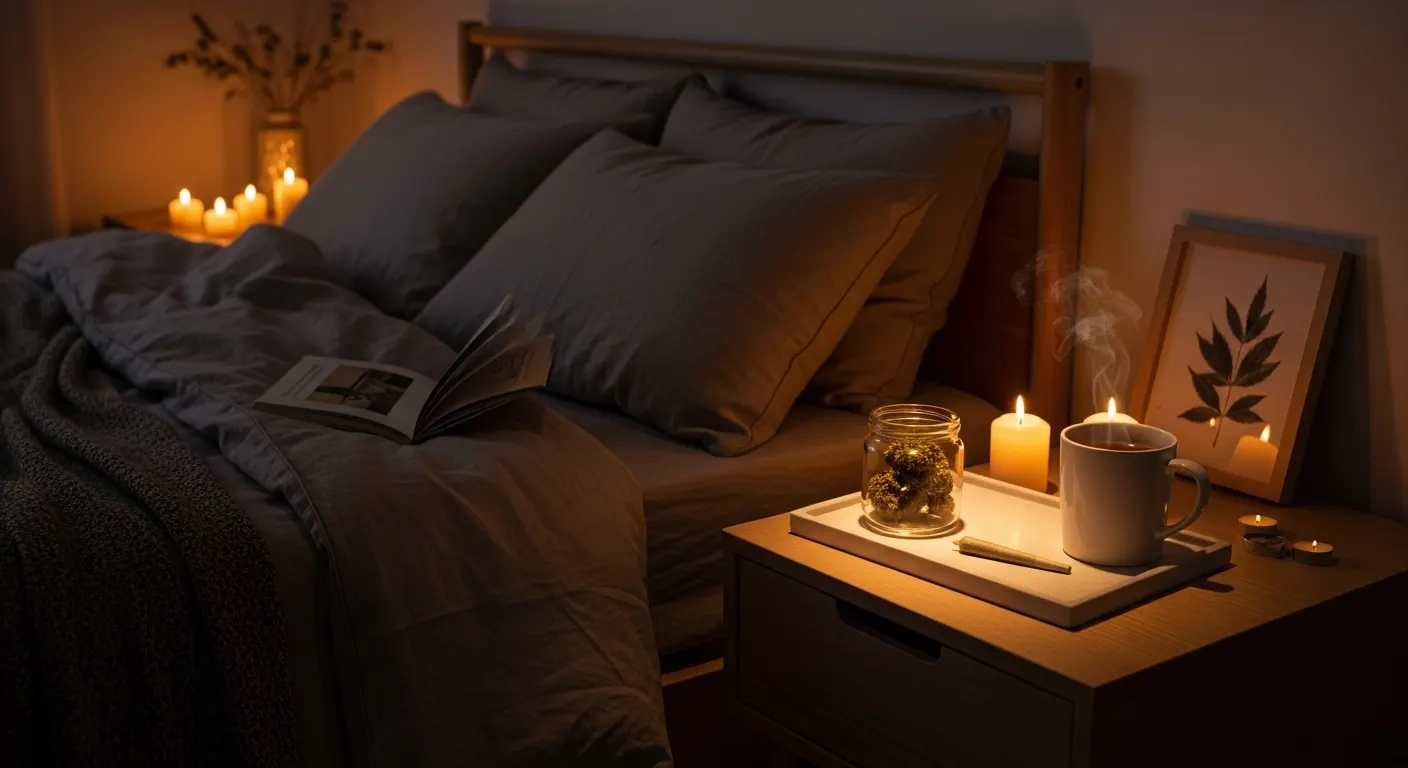
There’s a certain kind of night we’ve all had—you’re tired, but your brain won’t shut up. You’re scrolling, overthinking, replaying random moments from years ago. Sleep feels close, but not close enough. And then there are those other nights. The ones where your body softens, your thoughts quiet down, and sleep just… happens. For a lot of people, cannabis plays a role in that shift. But what’s actually going on? Let’s talk about the real cannabis sleep effects. Sleep isn’t one solid block—it’s made up of phases. One of the most important stages is REM (Rapid Eye Movement), the stage where dreaming happens and your brain processes emotions and memories. Here’s the twist: weed and REM sleep have a complicated relationship. THC has been shown to reduce the amount of time you spend in REM sleep. For some people, that means fewer dreams—or at least fewer intense ones. If you’re someone who deals with vivid dreams or even nightmares, this can feel like a relief. But REM sleep also plays a role in emotional regulation and memory. So while cutting it down might feel good short-term, it’s something to be aware of if cannabis becomes a nightly habit.
 Here’s something people overlook: cannabis isn’t just about the compound—it’s about the ritual. That moment when you decide the day is done. When you dim the lights, put your phone down (or try to), and permit yourself to rest. For some, keeping that routine consistent is easier when using services like Cannabis Delivery Costa Mesa, where access to quality products fits naturally into their nightly wind-down. Cannabis can support that transition, but it works best when it’s part of a bigger routine—calm environment, less stimulation, maybe even the same bedtime every night. That’s when it really starts to feel like a tool—not a crutch. Finding the Right Balance Not all strains, products, or doses will affect your sleep the same way. Some are more relaxing, others more uplifting. Some people respond better to low doses, others need a bit more to feel the effect. And that’s where quality and consistency matter. For those who prioritize ease and routine, options like Weed Delivery Lake Forest can make it simpler to stay consistent—which, honestly, plays a bigger role in sleep than most people expect. Better products, better habits, and a bit of self-awareness usually lead to better nights. It’s that simple.
It’s Not Just “Knocking You Out”
A common assumption is that cannabis just makes you sleepy, like flipping a switch. But it’s more layered than that. When you consume cannabis, especially strains higher in THC, your body starts to relax. Muscles loosen. Mental chatter slows. That “edge” you didn’t even realize you were carrying all day? It fades a bit. This is where people start noticing how cannabis affects sleep cycles. It’s not just about falling asleep faster—it’s about changing the way your body moves through the different stages of sleep.What Happens to REM Sleep?
Sleep isn’t one solid block—it’s made up of phases. One of the most important stages is REM (Rapid Eye Movement), the stage where dreaming happens and your brain processes emotions and memories. Here’s the twist: weed and REM sleep have a complicated relationship. THC has been shown to reduce the amount of time you spend in REM sleep. For some people, that means fewer dreams—or at least fewer intense ones. If you’re someone who deals with vivid dreams or even nightmares, this can feel like a relief. But REM sleep also plays a role in emotional regulation and memory. So while cutting it down might feel good short-term, it’s something to be aware of if cannabis becomes a nightly habit.Falling Asleep Faster… But Staying Asleep?
One of the biggest reasons people turn to cannabis is simple: they want to fall asleep faster. And in many cases, it works. When it comes to THC and sleep quality, users often report shorter sleep onset time—basically, less tossing and turning. That’s a win, especially if your mind tends to race at night. For example, people who rely on options like Weed Delivery Tustin often say that having the right product on hand makes that transition into sleep feel smoother and less frustrating. But here’s the nuance: while THC can help you fall asleep, it doesn’t always guarantee deeper, uninterrupted sleep throughout the night. Some people notice they wake up feeling slightly groggy or not fully rested. It’s not a dealbreaker—but it’s part of the full picture.So… Does It Help or Hurt?
This is the question everyone eventually asks: Does cannabis help or hurt sleep? And the honest answer is—it depends. If you’re dealing with occasional insomnia, stress, or anxiety, cannabis can feel like a reset button. It helps your body relax enough to actually drift off. But if it becomes something you rely on every single night, your body can start to adjust. Over time, you might need more to get the same effect, or notice changes in how rested you feel. It’s less about “good or bad” and more about how you use it.The Ritual Matters More Than You Think
Here’s something people overlook: cannabis isn’t just about the compound—it’s about the ritual. That moment when you decide the day is done. When you dim the lights, put your phone down (or try to), and permit yourself to rest. For some, keeping that routine consistent is easier when using services like Cannabis Delivery Costa Mesa, where access to quality products fits naturally into their nightly wind-down. Cannabis can support that transition, but it works best when it’s part of a bigger routine—calm environment, less stimulation, maybe even the same bedtime every night. That’s when it really starts to feel like a tool—not a crutch. Finding the Right Balance Not all strains, products, or doses will affect your sleep the same way. Some are more relaxing, others more uplifting. Some people respond better to low doses, others need a bit more to feel the effect. And that’s where quality and consistency matter. For those who prioritize ease and routine, options like Weed Delivery Lake Forest can make it simpler to stay consistent—which, honestly, plays a bigger role in sleep than most people expect. Better products, better habits, and a bit of self-awareness usually lead to better nights. It’s that simple.